
Understanding Oral Cancer Risk: What You Need to Know
Early Detection Can Save Lives
At Graceful Dental Innovations, integrity means caring for more than just teeth. It means paying attention to your total oral health—including conditions that may not cause pain or obvious symptoms.
One of the most important preventive services we provide during routine visits is oral cancer screening. While oral cancer is not discussed as often as other health concerns, it affects thousands of individuals each year and can be life-threatening if not discovered early.
The encouraging news is that early detection dramatically improves treatment outcomes. That is why oral cancer screenings are a standard part of our comprehensive examinations.
What Is Oral Cancer?
Oral cancer refers to cancers that develop in the tissues of the mouth or throat. These cancers can occur in areas such as:
- The tongue
- The floor of the mouth
- The cheeks
- The lips
- The gums
- The roof of the mouth
- The throat (oropharynx)
Many people assume oral cancer only affects those with obvious risk factors, but the reality is more complex. Increasingly, cases are being diagnosed in individuals who do not fit traditional risk profiles.
This is one reason routine screenings during dental visits are so important.
Why Early Detection Matters
Like many cancers, oral cancer often begins with subtle or painless changes in the tissues of the mouth. In its earliest stages, it may appear as:
- A persistent sore that does not heal
- Red or white patches in the mouth
- Thickened tissue
- A lump or swelling
- Difficulty swallowing or chewing
- Persistent hoarseness or throat discomfort
Because these changes are often painless, patients may not notice them. Dental professionals are trained to recognize early warning signs that may otherwise go undetected.
When oral cancer is found early, the five-year survival rate can exceed 80–90%. Unfortunately, many cases are discovered at later stages when treatment becomes more complex.
Routine screenings can make the difference.
Risk Factors for Oral Cancer
While anyone can develop oral cancer, certain factors increase risk.
Common risk factors include:
- Tobacco use (smoking or chewing tobacco)
- Excessive alcohol consumption
- Human papillomavirus (HPV)
- Sun exposure to the lips
- Age over 40
- A history of oral cancer
- Chronic irritation or inflammation
However, it is important to know that many patients diagnosed with oral cancer do not smoke or drink. This is why screenings remain important for everyone.
What Happens During an Oral Cancer Screening?
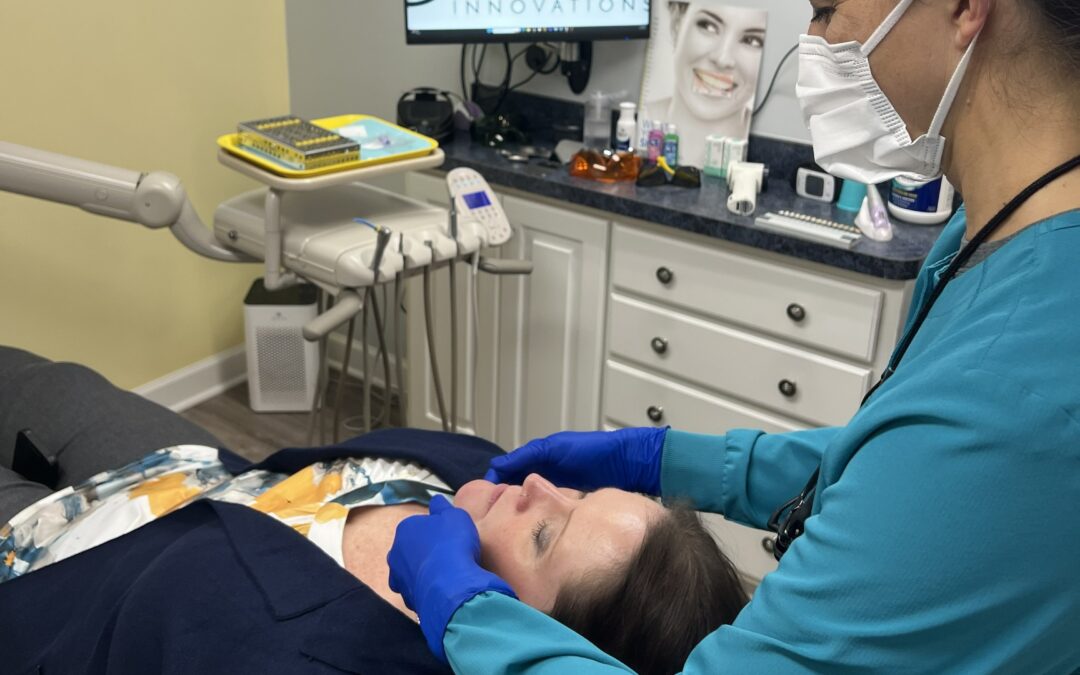
Oral cancer screening is a simple, quick, and painless part of your dental examination.
During your visit, we carefully evaluate the tissues of your mouth, including:
- The tongue
- The floor of the mouth
- The cheeks and lips
- The palate
- The throat area
- Lymph nodes in the neck and jaw
We look for changes in tissue color, texture, and symmetry, as well as any unusual lesions or swelling.
If an area requires closer evaluation, we may recommend monitoring it or referring for additional assessment.
Our goal is always early identification and appropriate follow-up when needed.
Enhanced Screening with VELscope Technology?
At Graceful Dental Innovations, we believe early detection deserves the most thorough evaluation possible. In addition to a traditional visual and tactile oral cancer screening, we offer enhanced screening with VELscope technology.
VELscope is a specialized light that allows us to examine oral tissues in a different way than the human eye alone can see. Healthy tissues naturally fluoresce under this light, while abnormal or potentially concerning tissues may appear darker.
This technology can help us:
- Identify subtle tissue changes earlier
- Detect abnormalities that may not be visible under normal lighting
- Provide an additional layer of screening for patient safety
VELscope screening is quick, comfortable, and completely non-invasive. While it does not replace traditional examination or diagnostic procedures, it is a valuable adjunct that helps us take a more proactive approach to oral cancer detection.
Our goal is always to provide the most thorough and thoughtful care possible.
Why Oral Cancer Screening Is Part of Complete Dentistry?
At Graceful Dental Innovations, we practice complete dentistry, which means evaluating how oral health relates to overall health.
Screening for oral cancer reflects our commitment to:
- Preventive care
- Whole-body health awareness
- Early detection of disease
- Comprehensive evaluation beyond teeth alone
Your dental visits are not just about cleaning and cavities—they are an opportunity to monitor important aspects of your overall health.
When Should You Be Screened?
We recommend oral cancer screening at every routine dental examination.
Even if you are not experiencing symptoms, regular screening allows us to monitor subtle changes over time.
If you notice any of the following between visits, we encourage you to contact our office:
- A sore that does not heal within two weeks
- A lump or thickening in the mouth or neck
- Difficulty swallowing
- Persistent hoarseness
- Unexplained bleeding in the mouth
When it comes to oral cancer, early attention is always the best approach.
Our Commitment to Your Health
At Graceful Dental Innovations, we believe that integrity means taking the time to look carefully, listen thoughtfully, and protect our patients’ health in every way we can.
Oral cancer screenings are a small part of your visit—but they can make an enormous difference in protecting your health and well-being.
If it has been some time since your last dental examination, we invite you to schedule a visit so we can help ensure everything is healthy.
Your health matters to us
With gratitude,